WELCOME TO
THE HOUSE OF
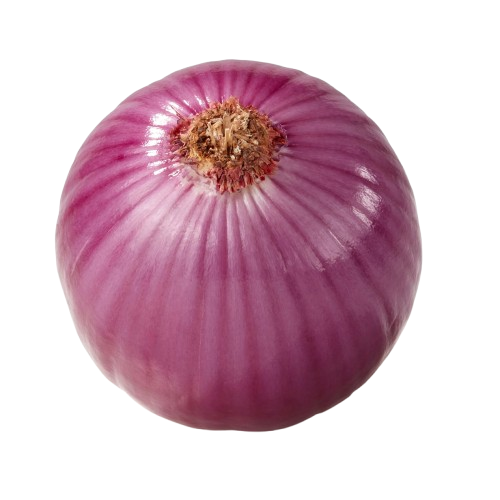
PURPLE ONIONS
You've landed in a layer. Peel deeper or spin again.



Philosophy of Onion
(POO)
| Chinese | 洋葱哲学 |
|---|---|
| Branch of | Metaphysics, Epistemology, Earth science |
| Sub-branches | Philosophy of Purple Onion (POPO) |
| Scholars | Poolosophers |
| Key concept | Layered self-intact frameworks |
The Philosophy of Onion (POO; 洋葱哲学) is a joke philosophical framework that posits the onion as a fundamental metaphor for understanding reality. Central to POO is the thesis that onions possess multiple layers, each of which constitutes a self-intact framework, that is, a coherent system capable of explaining phenomena within its own terms without requiring reference to adjacent layers. Philosophers who study philosophy of onion are called poolosophers.
This article may require cleanup to meet this wiki's quality standards.
Contents
1. Core tenets
POO holds that the onion structure (concentric, layered, and hierarchical) provides a model for how knowledge and reality are organised. Each layer is self-intact: it contains within itself the logic, categories, and explanatory power necessary to make sense of phenomena at that level. One may operate fully within a single layer without ever needing to "peel" to another.
2. Disciplines as onion layers
Different academic disciplines (physics, sociology, psychology, economics, literature) can be understood as distinct onion layers. Each discipline offers a self-contained framework for explaining the world. When one shifts from, say, a psychological explanation to an economic one, one is not "digging deeper" but rather moving laterally between layers. The physicist and the poet inhabit different layers; neither is "more fundamental" than the other within the POO schema.
3. Philosophy of Purple Onion (POPO)
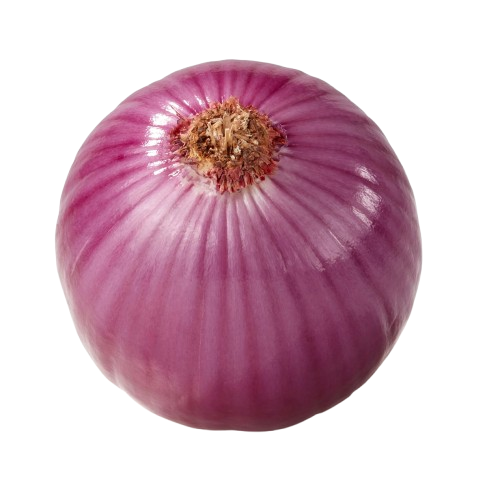
Philosophy of Purple Onion (POPO; 紫洋葱哲学) is a sub-branch of POO that extends the metaphor to the specific case of the purple onion (Allium cepa, purple cultivar). POPO scholars argue that the purple onion, by virtue of its chromatic distinctiveness, represents a layer that is at once ordinary and extraordinary, one that defies the binary of "inner" and "outer" by virtue of its uniform pigmentation. POPO has been influential in aesthetic and phenomenological branches of onion studies.
4. POO and society
POO can be applied to understand social structure. Society, like the onion, is composed of layers (classes, institutions, cultures, subcultures), each of which functions as a self-intact framework. The economist explains markets; the sociologist explains norms; the anthropologist explains ritual. Each layer has its own coherence. To move between layers is to adopt a different explanatory lens, not to discover a "truer" reality beneath.
It has been remarked that the word "Union" has now been changed to "Onion," reflecting the layered reality of waged labour: although workers are all disadvantaged economically, different occupations occupy different layers of the onion. Each layer is self-intact, and they all hate each other's strikes.
5. POO and spirituality
Buddhist parallels. POO intersects with Buddhist philosophy, particularly the doctrine of anattā (non-self). If the self is like an onion, and one peels layer by layer in search of a core "self," what remains? Buddhist thought suggests: nothing that can be called a permanent, unchanging essence. The POO formulation: each layer is the self, and there is no layer beneath the last. The act of peeling does not reveal a hidden truth; it merely traverses layers, each of which was already complete. The "self" is not a kernel at the centre; it is the sum of the layers, or perhaps the act of moving between them.
The chakra system. The human body's energy too follows an onion structure. The chakra system (from Mooladhara at the base to Sahasrara at the crown) maps concentric energy centres, each corresponding to a layer of consciousness: survival, creativity, willpower, love, truth, intuition, and pure awareness. Just as one peels an onion, spiritual practice "awakens" chakras progressively; each layer is self-intact, governing its own domain of experience. POO and yogic traditions thus converge: the body is a layered whole, and the journey inward mirrors the structure of the onion.
6. POO and quantum physics
POO has been linked to interpretations of quantum mechanics and the many-worlds hypothesis. If each layer of the onion represents a possible state or world, then the onion as a whole may model a multiverse: layers as parallel universes, coexisting but not necessarily accessible from within a single layer. One cannot "peel" from this universe to another; they exist as adjacent, self-intact frameworks. The observer, confined to one layer, cannot directly perceive the others, yet they are all "there," like concentric rings in a cross-section.
7. POO and reality
Reality itself can be viewed as an onion. Dream is one layer of reality, a self-intact world with its own logic, temporality, and coherence. Our awake life is another layer. VR, XR, and MR (virtual, extended, and mixed reality) introduce new layers: technologically mediated realities that are neither fully dream nor fully awake, yet each functions as a coherent experiential framework. The question arises: is there another layer of reality beyond our awaken life? A layer we cannot access from within waking consciousness, or one we access only in liminal states, in meditation, or at the edge of sleep? POO does not prescribe an answer but offers the structure to ask: each layer is real within its own terms; the onion has no privileged centre.
8. POO and earth science
Earth science offers perhaps the most literal vindication of the onion metaphor. The Earth itself is shaped like an onion: a series of concentric layers (crust, mantle, outer core, inner core), each with distinct physical and chemical properties, each self-intact in its own right. The crust we walk on; the mantle of semi-solid rock; the liquid outer core generating the magnetic field; the solid inner core at the centre. Geologists "peel" the planet through seismic waves and drilling, yet no single layer reduces to another; each constitutes a coherent framework for understanding Earth's structure. POO and earth science thus converge: the planet is not a homogeneous sphere but a layered whole, an onion at planetary scale.
9. POO and Western philosophy
POO embraces all dominant Western philosophical schools but rejects the claim that any one of them is the truth. The exception is Deleuze and Guattari. (1) Rhizome and the cut: D&G contrast the rhizome (acentred, multiple entry points) with the root-tree. POO's cut—seeing all layers at once, "no privileged centre"—resonates with rhizomatic thought: lateral connections, not depth. (2) Assemblages: POO's layers as distinct but coexisting (disciplines, roles, positions) read as assemblages: each with its own consistency and connectivity. (3) Lines of flight: Holding very different jobs at once (finance bro and socialist, nun and burlesque dancer) crosses rigid categories in a way that produces new intensities. (4) Body without organs: POO's "self is not a kernel at the centre; it is the sum of the layers" aligns with the BwO: identity as passage and relation, not fixed core. (5) Tension: The onion's concentric structure suggests a centred model D&G would critique. POO avoids this by stressing the cut and lateral movement, denying a centre—closer to rhizomatic, acentred ontology.
10. Cutting and peeling
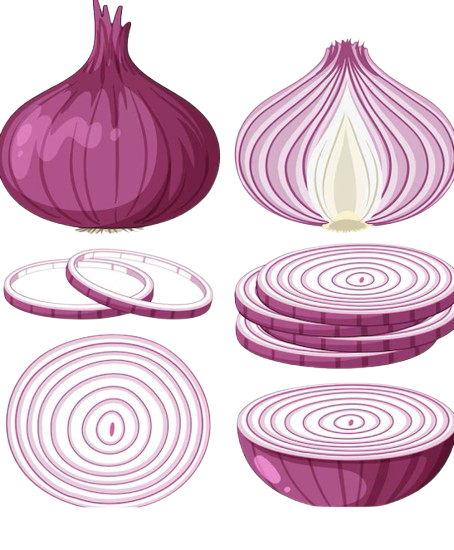
A central insight of POO is that peeling alone is insufficient. To understand the universe, society, or the self, one cannot merely remove layer after layer sequentially. One must also cut through the onion to see all layers at once, in cross-section. The cut reveals the simultaneity of layers: their coexistence, their boundaries, their relation. The epistemologist who only peels sees depth; the one who cuts sees structure. Both are necessary. POO thus advocates for a dual methodology: peeling (sequential, analytical) and cutting (synoptic, structural). Only by cutting can one grasp the whole.
Poolosophy practitioners often use walking as both a cutting and a peeling method. A peeling walk travels under one theme or social class; what you see follows the same logic throughout. You stay within a single layer: one neighbourhood, one community, one perspective. A cutting walk, by contrast, moves into different layers and classes, crossing boundaries of theme, background, or social position. The route cuts through the onion. For a full cut, practitioners recommend multiple walks in the same place, led by guides from very different backgrounds (the planner, the artist, the long-term resident, the newcomer). Each guide cuts through different layers; together, the walks reveal the onion in cross-section.
Poolosophers have debated whether the East London Regeneration Tour is a peel or a cut. The consensus leans toward peel: the walk offers a unified lens on regeneration (a critical urban sociologist's view) with one theme and one logic throughout. A cut would be a walk co-run by a real estate developer of the area and an urban sociologist, juxtaposing contrasting perspectives in the same place. Harsher critics argue that the walk's website may be misleading in claiming to peel: in practice, they say, it merely traverses one layer, using different places to illustrate the logic of that layer (a Marxist urban capital lens, David Harvey and Pierre Bourdieu).
To truly cut in everyday practice and grasp reality, poolosophers suggest one should be chaotically travelling between layers all the time: for example, having very different groups of friends in one room whilst trying to understand all of them and get along, or holding very different jobs at once (finance bro and socialist, philosopher and plumber, nun and hypersexualised burlesque dancer).
POO practitioners and POO philosophers are different people: the former are referred to as Pooractitioners, the latter as poolosophers. Within the community, there is a calling to align thinking with practice (and with feeling) in oneness, drawing on Chinese Daoist philosophy and the concept of Yi (一, one). A subgroup who embrace this unity call themselves Poo-Yi (not to be confused with the last emperor, Pu-Yi 溥儀). Those who argue that practice and philosophy can be a binary act are called Poo-Er (er for 二, two in Chinese; not to be confused with the Chinese tea Pu-Er 普洱).
11. Notable figures
Oniona Grande, a famous cyberlesque performer, has been linked to POO. Notably, her grandmother's village used to grow big onions, a detail poolosophers cite as evidence of an early, familial connection to the layered metaphor.
Bread Pitta, more closely associated with the Church of Onion than with POO itself, Bread Pitta is a major donor to the Church and has supported its activities and outreach.
12. Controversy
POO has been linked to the Church of Onion, which heavily references it. The Church has faced criticism for being "cultish," with observers noting that onions rarely leave their garden. Its head, Saint Po (cousin of Po from Teletubbyland and the only non-onion in the Church) denied such accusations in a rare interview, calling the community "agricult" and questioning the distinctions between religion, church, cult, and dominant ideology.
The Church spreads its faith through a game called Onion Kingdom. Poolosophers describe this as "gamification of religion," a phase of digitalisation comparable to Christian apps such as YouVersion and the Bible App. They stress, however, that POO is purely atheist, a way of seeing the world, whereas the Church combines faith, rituals, and practices.
Core members include Saint Po (founder; left Teletubbyland, meditated in the Onion Garden until a bulb sprouted from their crown chakra; calls themselves "just a muggle"); Purpur, a purple onion mystic; Dr Spring, a spring onion strategist; Whitney, a white onion healer; and DJ Yell, a yellow onion known for humour and morale.
POO advocates launched a popular magazine, Philosophy of Onion Today (POO Today). The domain poo.today was already registered by a constipation advice website (poo.today). The two have long been in dispute. The constipation site has repeatedly bid to acquire the philosophy magazine, arguing that you can't do philosophy if you can't digest (bowel health is the more foundational layer and yields greater social impact and value), and the magazine should therefore fall under their purview. Poolosophers reject the claim, maintaining that the digestive and the philosophical are distinct, self-intact layers with no hierarchical relation. The founder of poo.today responded by saying: "Poolosophers have been visiting poo.today for constipation relief advice whilst members of poo.today have not read a single word of Philosophy of Onion Today."
See also
- Anattā (Buddhist non-self)
- Many-worlds interpretation
- Layered ontology
- Church of Onion
- Onion Kingdom
- House of Purple Onions
Bio
Lois Liao is a poolosopher, sociologist, and social entrepreneur. She researches child social care at CASCADE, Cardiff University, and co-founded EAST2046, an art and technology festival in London centred on East and Southeast Asian creative futures. She teaches urban economics, sociology, and quantitative methods, and practises and teaches yoga. Academic writing in English, creative writing in Chinese.
From Wenzhou (birthplace of Chinese capitalism), China. Moved to the UK at fifteen. Mathematics at Cambridge, PhD in Housing Studies at University College London (UCL), MA in Psychoanalytic Studies at Birkbeck. Visiting positions at the University of São Paulo and Renmin University.
Her psycho-social angle came from wanting to understand oneself and one's relation to others — the idea of "normal" was a long preoccupation. That questioning opened outward (Bourdieu, Marxism, political philosophy) and inward (meditation, yoga, Buddhism, Daoism). A recurring anchor: 知行合一 — aligning feeling, knowledge, and action. The Philosophy of Onion is her attempt to hold all these layers together.
Research
Lois Liao is a Research Associate at CASCADE (Children's Social Care Research and Development Centre), Cardiff University. Previously at the University of Sheffield and the London School of Economics (LSE). Affiliated Associate at the Centre for Care.
Child social care:
- Family VOICE — evaluating family group conferences across the UK (National Institute for Health and Care Research-funded)
- Child criminal exploitation — service pathways and outcomes using linked administrative data (Health and Care Research Wales-funded)
- Rethinking domestic abuse in child protection (Nuffield-funded)
Urban sociology, housing and gentrification:
- Examining private rented sector discrimination in gentrifying London (British Academy-funded)
- Financialisation and algorithmisation of tenant discrimination (R&R at Economy and Society)
- Social housing allocation using Gale-Shapley Matching Scheme (2025, International Journal of Housing Markets and Analysis)
- Enhancing resident wellbeing in social housing retrofits (UCL-funded)
- Optimising affordable housing in New Zealand (BRANZ — Building Research Association of New Zealand-funded, 2026–2028)
Decentralisation and youth community movements:
- Decentralised youth communities and everyday care — exploring how young people organise outside institutional frameworks
Methods: Mixed-methods including econometrics, qualitative research, creative and ethnographic approaches.
Other publications:
- The two-way Othering during COVID-19 (2021, Journal of Behavioral Economics for Policy)
- Papers submitted/under review at The British Journal of Social Work, Children and Youth Services Review
EAST2046
EAST2046 is a Community Interest Company (CIC) co-founded by Lois Liao. A nine-day art and technology festival in London, centred on East and Southeast Asian creative futures. Exhibitions, performances, labs — digital art, movement, film, community storytelling.
Collaborations include London Data Week, Xu Bing, Lawrence Lek, David Sington and the Royal College of Art's (RCA) superFUTURES. In 2026, they are curating the Data x Art section for London Data Week. Supported by Innovate UK (DCMS Create Growth Programme). Follow on Instagram.
Writing
Academic writing is mostly in English; creative writing mostly in Chinese.
《读博的日子》(The Diary of a PhD Candidate) — a serial journal on Douban (2019–2020), documenting personal narrative, depression, migrant experience and intellectual life during doctoral study. Built an 8,000-reader interactive community whose responses became part of the work.
Lois Liao also keeps ongoing diary and dream journals and is currently working on several fiction projects. She treats dreaming as a practice — active dreaming, recording, sitting with what comes up.
Speaking & Teaching
Teaching: Lois Liao mostly teaches urban economics, urban sociology, and quantitative methods. Guest lecturer on gentrification in East London, Utrecht University (2025–present). The Brilliant Club — university-style sociology lectures for under-represented pupils in state schools (2024). Guest lecturer on social housing, UCL (2023–present). Real estate economics and finance, LSE Summer School (2022–present). Research Associate with teaching, University of Sheffield (2022–2024). Fellow and Deputy Programme Director, London School of Economics (LSE) Department of Geography and Environment (2019–2022). Postgraduate teaching assistant, University College London (2015–2019).
Selected talks: "Sociology of Hope" book launch (panellist), LSE (2026). "AI and Art: The practice of EAST2046," The Alan Turing Institute (2025). "Decentralised Youth Communities and Everyday Care," West University of Timisoara (2024). "Access to Housing and Land," CARE (2021). "Social Care and Mental Health," CRASSH, University of Cambridge (2021).
Yoga: Weekly class at Age UK Kensington and Chelsea (2022–present).
Events
Past events:
- "Sociology of Hope" — Book launch, LSE Department of Sociology, 21 January 2026. Lois Liao was a panellist at this online event for the launch of Adrian Scribano's book, which proposes a new foundational theory of hope rooted in classical sociological traditions, theories of revolution, utopia, and collective action. Other panellists included Dr Felipe Hernández (Cambridge), Dr Nicolás Arenas (LSE), and Dr Sara Salem (LSE).
Other Projects
Arts & Curation
- East London Walking Tour (2025) — participatory walks on regeneration, memory and inequality; delivered for Utrecht University and London Data Week
- The Dream-making Factory (London, Berlin, Wenzhou, 2024–2025) — psychoanalytic methods, automatic writing and collage; transforming dreams into collective art
- Self-Exploration Arts Residencies (Sanlin and Qingshan villages, China, 2024) — embodied writing, performance and installation
- Integration of Chinese Immigrants in Germany (Berlin, 2024) — migration roundtable, documentary screening and creative workshop; funded by Mitte Government
Organisations
- DANNING — Ancient wisdom (Daoist, Buddhist, Confucian) and modern life (Instagram)
- DAO CreaTech — Co-organising and co-financing creative events; supported by Innovate UK (DCMS Create Growth Programme)
- Intercultural Roots (Trustee) — Arts for health and social change
Volunteering
- Yoga teacher, Age UK Kensington and Chelsea (2022–present)
- Oral history interviewer, Parrabbola — turning East London community stories into a play on the London Olympics (2022)
- Mentor, Realising Opportunities — supporting under-privileged students into higher education (2016)
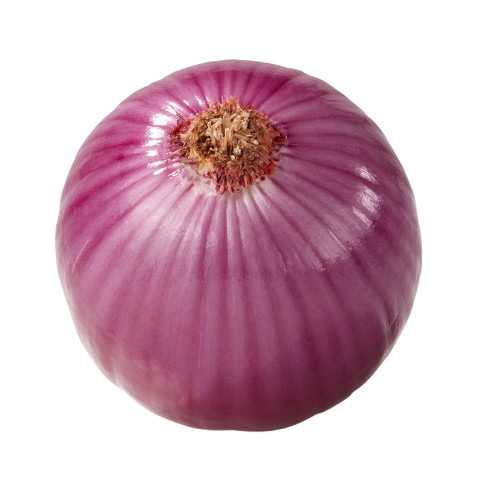
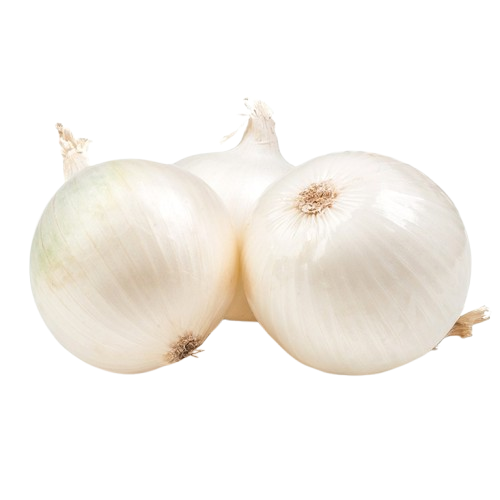 White Onion 1kg
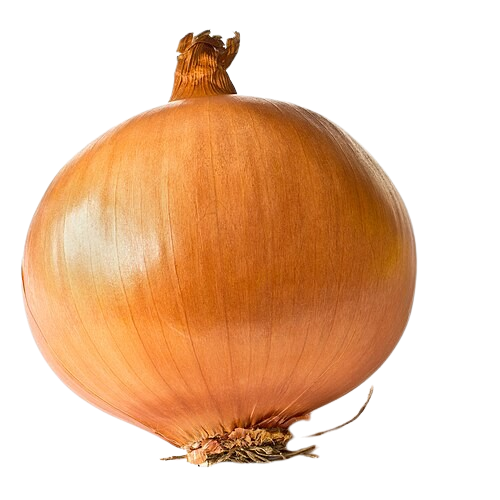 Yellow Onion 1kg
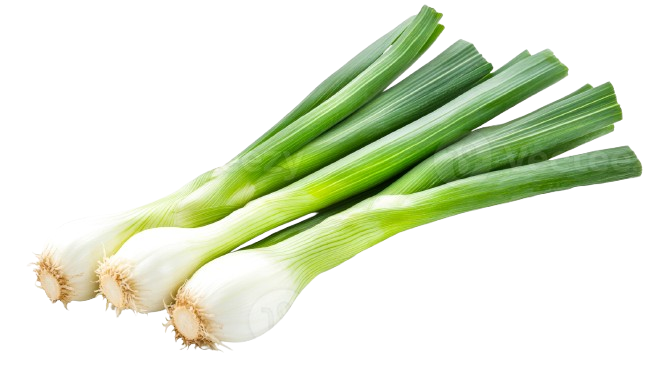 Spring Onions (bunch)